St Mary Magdalene, Paddington

The St Sepulchre Chapel after conservation. Image: Claudia Fiocchetti
The undercroft of St Mary Magdalene Church (Grade I, constructed 1870s) was modified by Sir Ninian Comper in 1895 to create the decorative Chapel of St Sepulchre, inspired by a fifteenth-century chantry. This jewel-like space contrasts with the plain undercroft, holding significant architectural merit. However, decades of deterioration, due to intrinsic construction flaws and long-term water penetration, have caused extensive damage. Visual inspections reveal severe issues, including large-scale paint and plaster vault losses, flaking paint, damaged stonework, and efflorescence, with no identified causes or management strategy in place.
The overall approach to conserving the Chapel aimed to be well-informed and judicious. We deemed it necessary to understand the issues and mechanisms for decay, as well as the history of change, before conducting any remedial work and conservation treatments.
We worked with Tobit Curteis Associates (TCA), who had been monitoring the environmental conditions of the church and Chapel since 2016. The extensive environmental analysis is symptomatic of an organic, iterative and reflective approach, appropriate to the Chapel’s challenging environmental conditions. Knowledge gathering and interpretation of data has been vital.
The other key strand of this approach was the initial conservation trials phase. From 2021, a ‘conservation studio’ was established in the Chapel to design, explore and implement trial treatments, and conduct other key investigations. The trials, implemented by Claudia Fiocchetti ACR, were designed to inform and develop the conservation methodology, techniques, and philosophical approach to the overall presentation and appearance of the Chapel.
‘Phase 1’ of the works focused on the Nave vault and south wall as the most damaged areas of the Chapel, and the heritage most at risk of loss – such is the fragility and instability of the fabric, the level of threat presented by high relative humidity and the complex hygral environment, the Chapel could not realistically be conserved in a single tranche of work. Priority was given to preventative conservation measures such as essential maintenance and consolidation, followed by passive treatments such as environmental control.
The strategy for the environmental control of the Chapel was three-fold:
1) Ongoing environmental monitoring;
2) Installation of a conservation heating system; and
3) Air leakage improvements via a new screen.
Painting conservation considered the Chapel environment and painting substrates, including plaster, stone, timber, marouflage, and lead ‘star’ attachments to the vaults. One of the main curatorial debates surrounded the extent of retouching. We prioritised conservation procedures aimed at improving the stability of the paintings, accepting past and future losses as part of the character and story of the Chapel.

Large-scale repainting trials
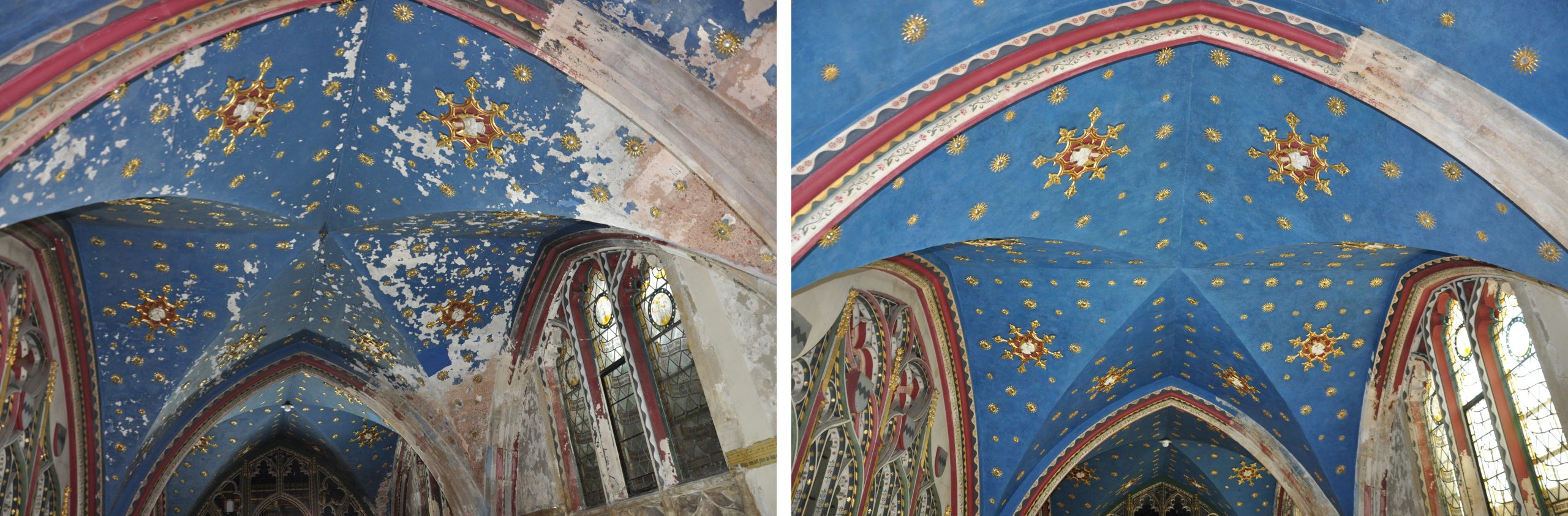
General view before and after. Image: Claudio Fiocchetti
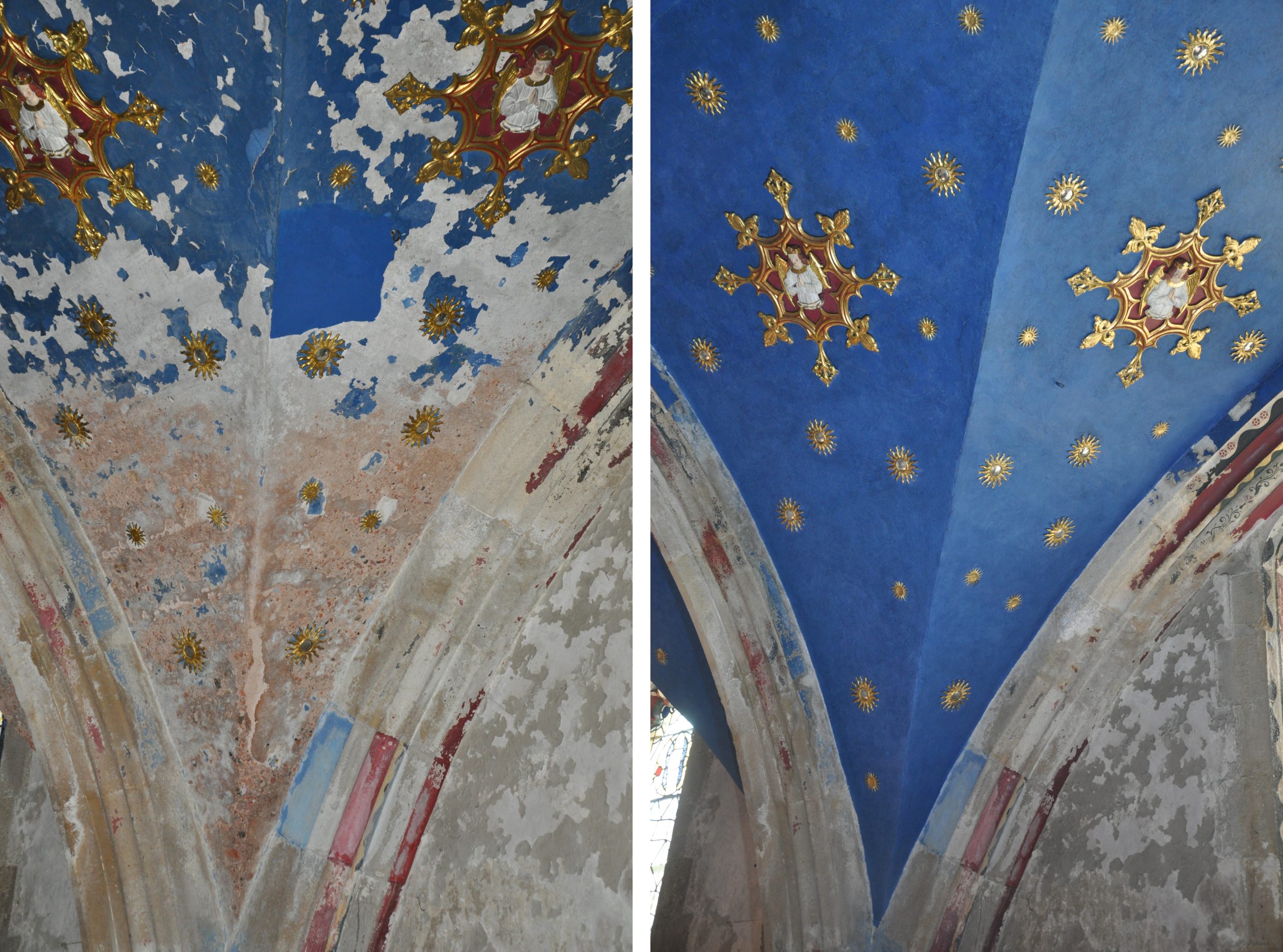
Southwest corner bay 3, before and after. Image credit: Claudia Fiocchetti