Taylor’s Bellfoundry, Loughborough
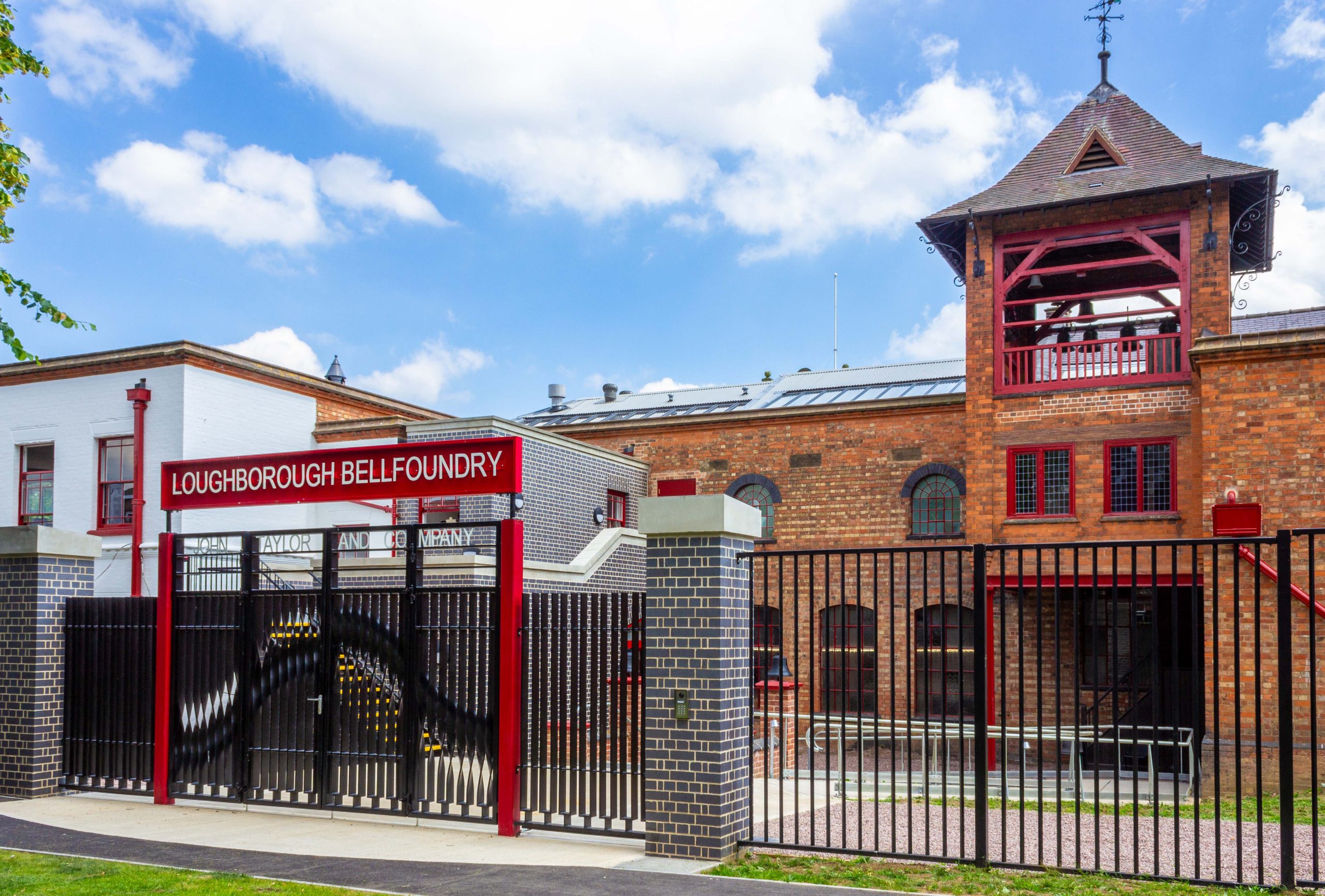
The Entrance Courtyard. Image: Katelyn Collins.
Taylor’s Bellfoundry, the last major working bell foundry in Britain, has been saved from closure after conservation works by Caroe Architecture Ltd. The Loughborough-based Grade II* listed buildings have been repaired and updated, including with accessibility improvements, roof repairs and the creation of a new museum to tell the story of bell making in Britian – and of Taylor’s important role within it.
Taylor’s Bellfoundry is significant for its retention of historic exteriors, machinery and plan-form. It is a rare survival of traditional methods of bell production and tuning, and unique in Britain as a purpose-built bell foundry. Phases of alteration in the late nineteenth and twentieth century reflect the history of the nation, as industrial technology and manufacturing processes improved and as demand for bells waxed and waned through two world wars. There are a number of remarkable historic features, including a 67-foot high chimney (built in 1866) and an early-twentieth-century carillon tower.
Taylor’s is internationally renowned for the quality of its bells. It has cast over 25,000 bells, located in more than 100 countries. Notable installations include bells at landmarks such as London’s St Paul’s Cathedral (including the 15-ton ‘Great Paul’ bell), the Washington National Cathedral, Australia’s National Carillon in Canberra, and Cape Town City Hall in South Africa.
Caroe Architecture was appointed to develop design proposals in 2019 as conservation architects and lead consultants alongside researching and writing a Conservation Management Plan for the site.
Through the pandemic the project was successful in being awarded support from the Cultural Recovery Fund which kick-started much of the back log repair and conservation work to the external envelope. The main conservation and improvement works began on site in Spring 2023, in collaboration with heritage contractors Messenger BCR, museum, retail specialists cre8 and exhibition designer Redman Design.
There were three key phases to the main works:
- Completely reconfiguring the existing museum in the ‘Foundry’ building, removing internal walls added in the 1980s, and replacing a leaking roof. Accessibility was enhanced with the installation of a lift and baby-changing facilities. Working with specialists, a new exhibition fit out-and shop was delivered.
- Reconfiguration of the company archive room, which houses documents dating back to the late eighteenth century, along with improvements to offices and a boardroom now available for community use, introducing a new lift to the ‘Works’ building too, and WCs to provide greater accessibility.
- Creation of new public reception and entrance with a landscaped courtyard to provide a welcoming accessible space; a contemporary intervention but still very much in keeping with the historic setting – reinstating the entrance in its historic location.
All phases of the works involved detailed design, specification, complex coordination of work activities around a working industrial bell foundry and visitor attraction. Each section of the work also included external building fabric repairs and conservation, design and implementation of fire safety improvements, working with fire consultants, as well as delivery of the re-presentation of the site. At all times however it was of paramount importance, while making the changes, to retain the distinct historic character and ‘spirit’ of the buildings and interiors that makes it such a special place for tourist visitors and foundry customers to step into.
The project was funded by The National Lottery Heritage Fund and Loughborough Town Deal, along with support from various trusts, foundations, private donors, and community organisations. The Loughborough Bellfoundry Trust, in partnership with the bell founding firm John Taylor and Company, oversaw the initiative.
Taylor’s Bellfoundry is now a thriving cultural centre as well as a busy industrial site, continuing to produce some of the finest bells in the world. It remains a distinctive landmark in the centre of Loughborough, celebrating the rich industrial history of the city and wider country.
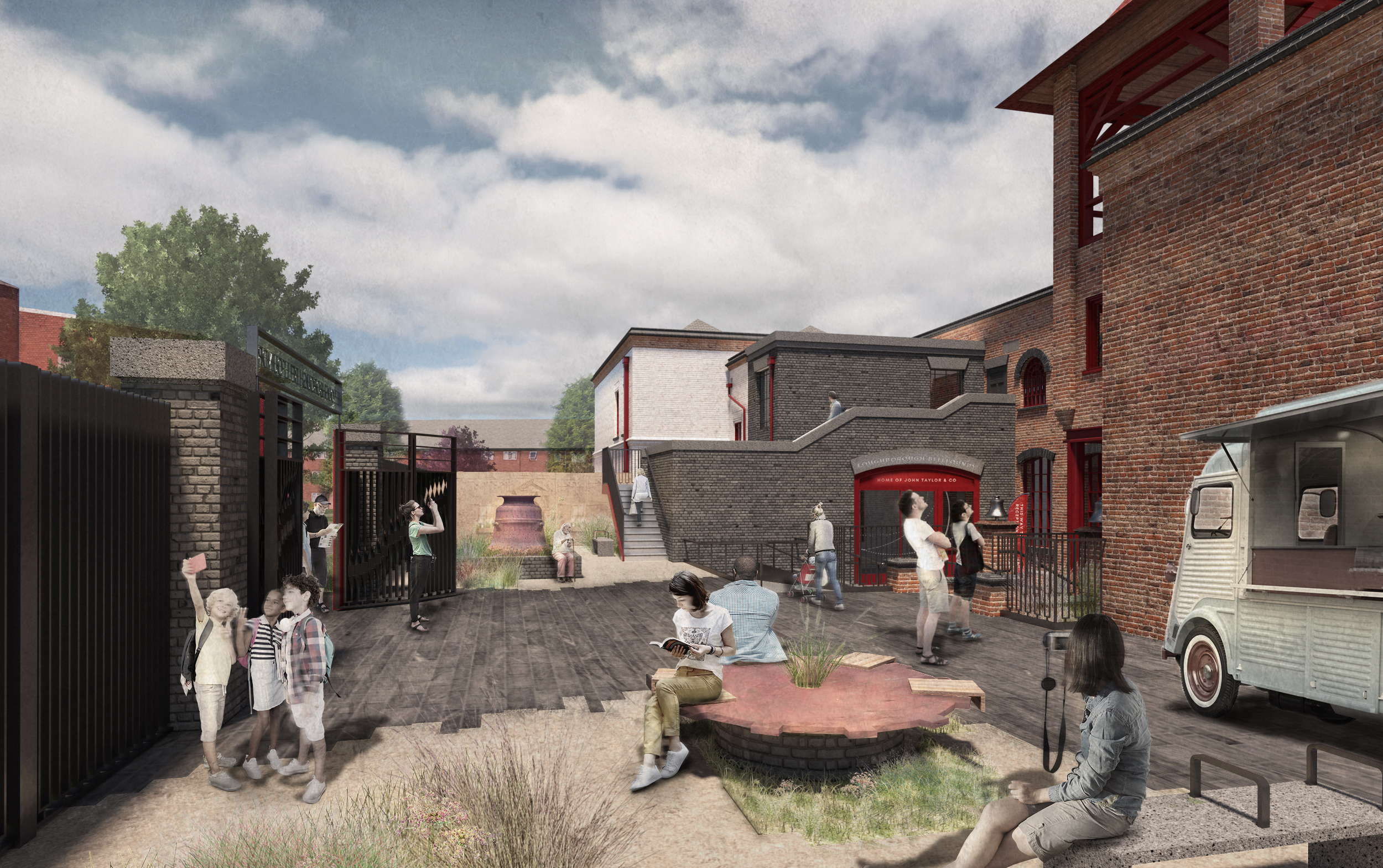
Pre-construction render of the carillon courtyard.
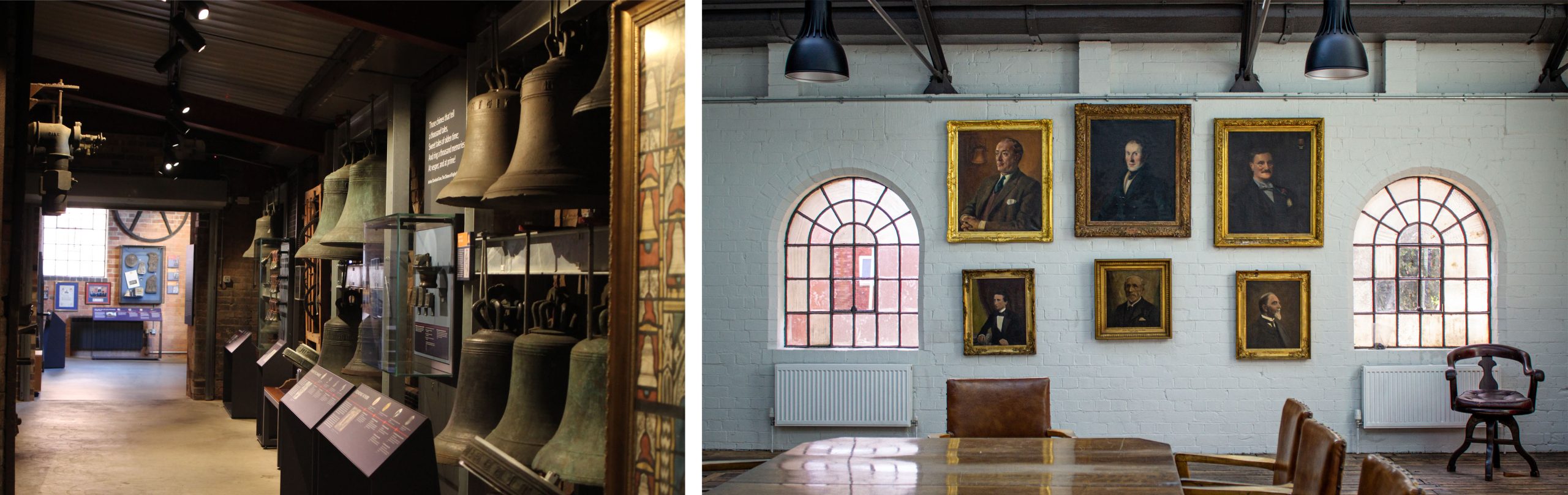
The Museum Gallery (bottom) and Board Room. Images: Katelyn Collins.
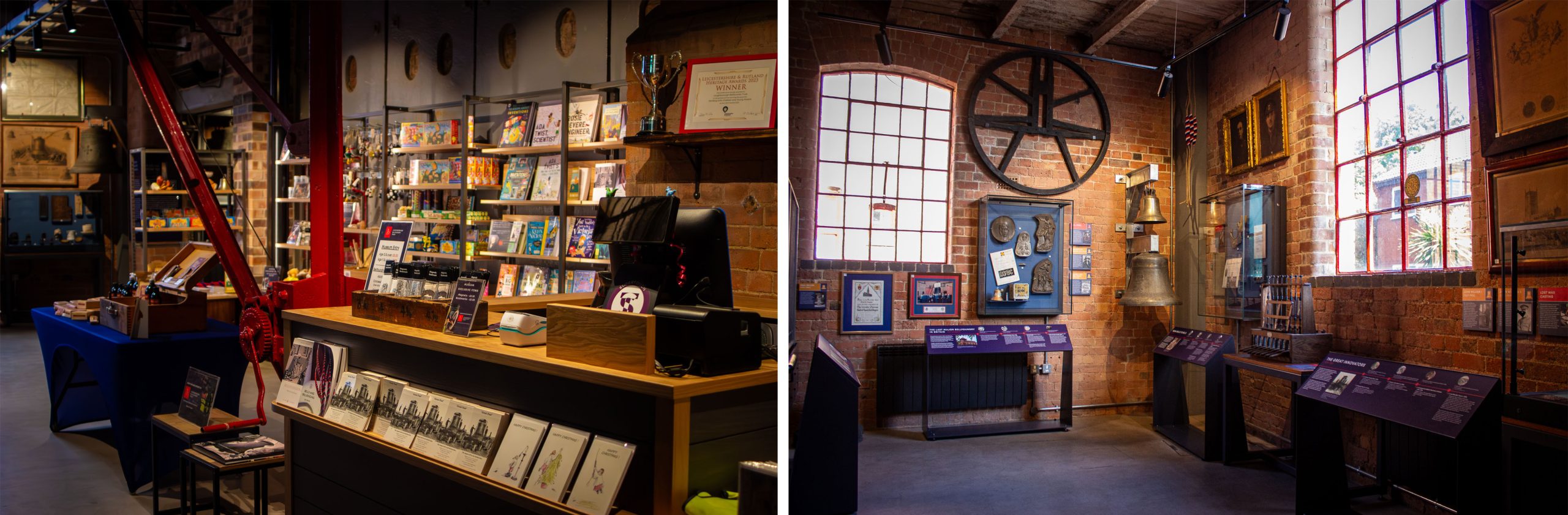
The Museum Gift Shop and Museum Gallery (top). Images: Katelyn Collins.
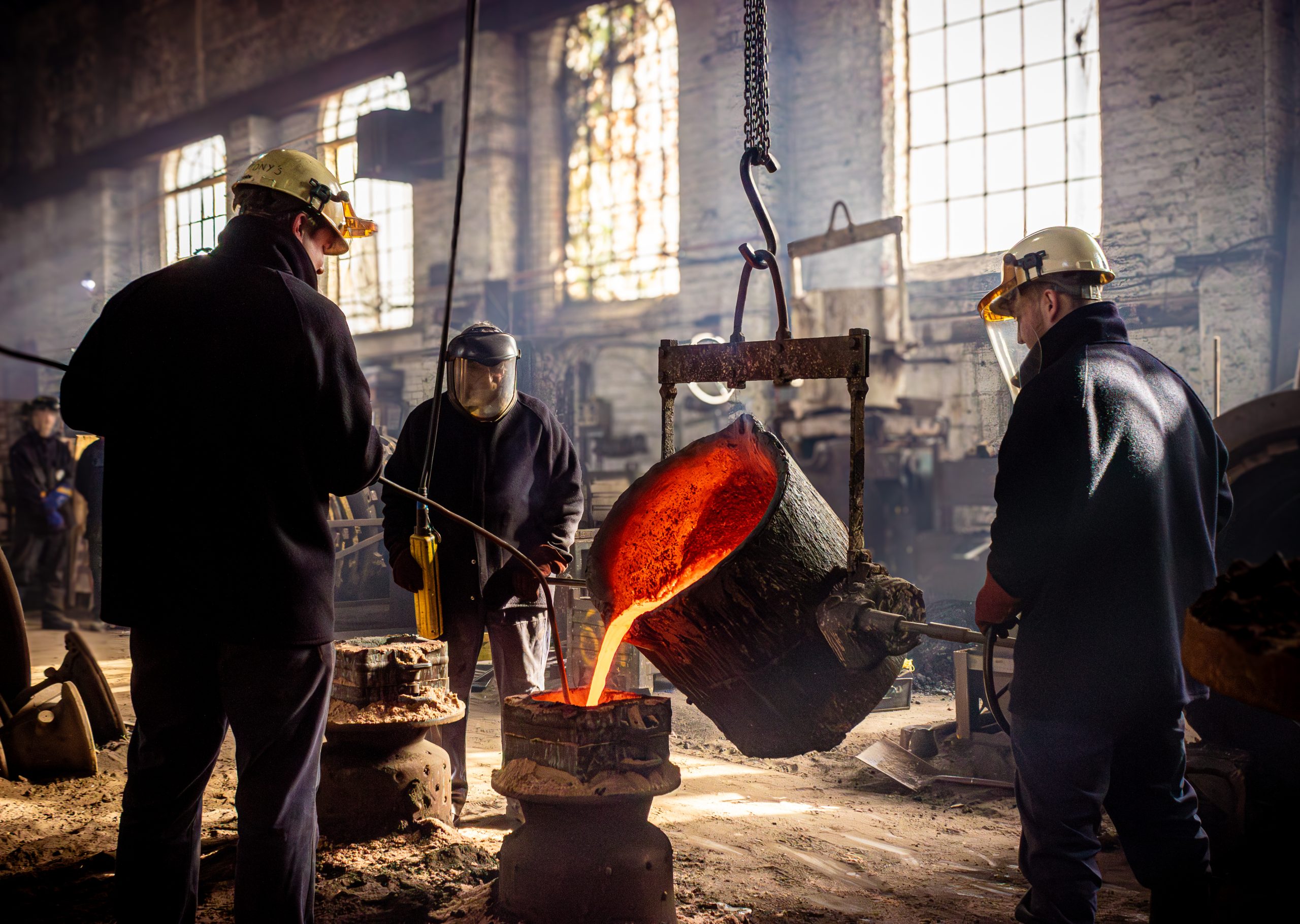
Bell casting at Taylor’s Bellfoundry. Image: Katelyn Collins.